
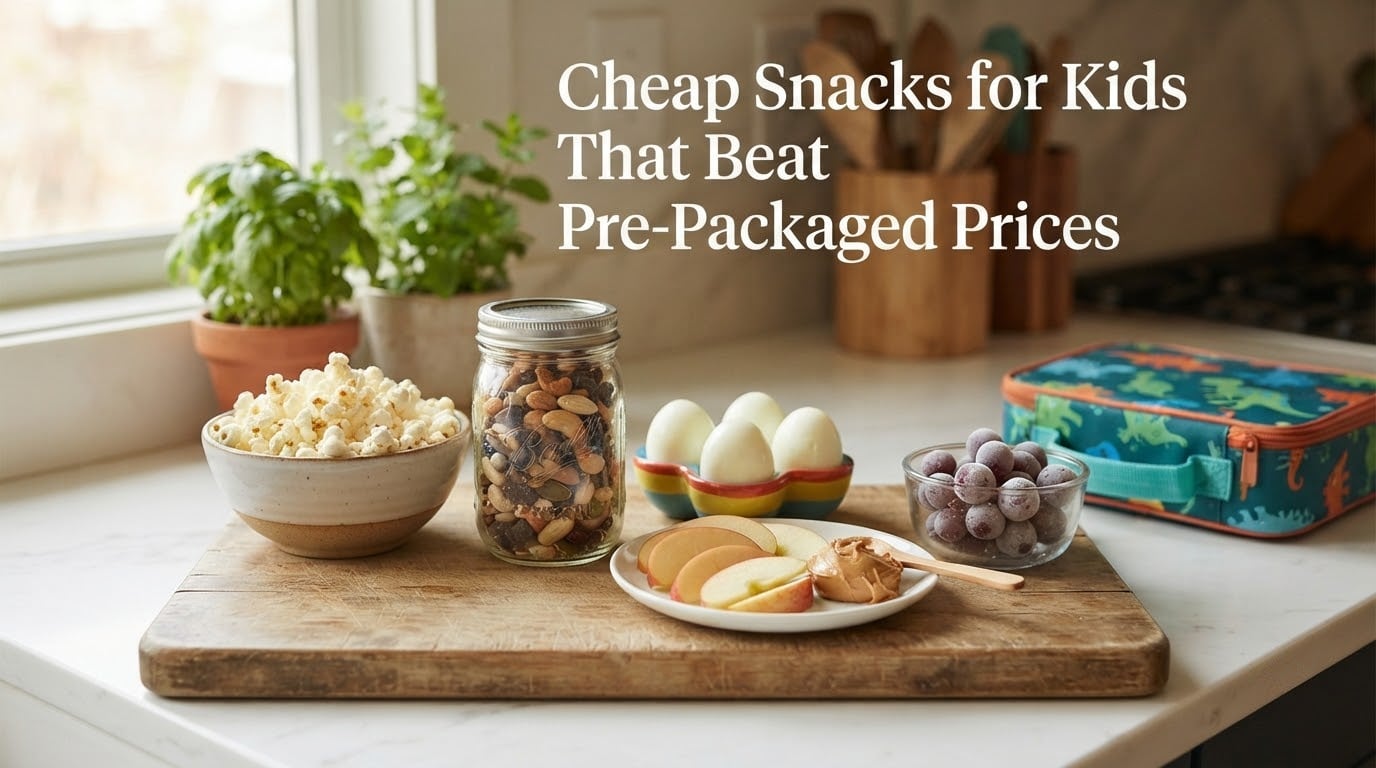
Last Tuesday, my daughter came home from school begging for fruit snacks. The box I had was empty, so I checked the price at our local store. A 0.9 oz pouch cost $1.29 for six tiny servings. That works out to 21 cents per serving for a snack loaded with sugar and almost no real fruit. I put it back and walked to the bulk section.
I came home with a 2 lb bag of popcorn kernels for the same price. That bag produces 32 servings of popcorn. The cost per serving dropped to about 4 cents. My kids could not tell the difference between the popcorn and the fruit snacks, and they felt just as snacky afterward. That single trip started a six-month experiment in our kitchen.
Our team spent the next half year testing homemade alternatives to the most popular pre-packaged snacks. We compared costs down to the cent, measured prep time, and tracked which snacks our kids actually finished. This guide shares what we found. You will learn cheap snacks for kids that beat pre-packaged prices every single week, plus the framework we use to spot savings on any snack your family loves.
Table of Contents
- The Real Cost of Pre-Packaged Snacks (And Why Homemade Wins)
- The Time-Cost Tradeoff: When Homemade Saves Money
- 12 Cheap Snacks for Kids That Beat Pre-Packaged Prices
- 1. Stovetop Popcorn (4 cents per serving)
- 2. Hard-Boiled Eggs (15 cents per serving)
- 3. Frozen Grapes (12 cents per serving)
- 4. Banana Ice Cream (20 cents per serving)
- 5. Homemade Trail Mix (18 cents per serving)
- 6. Ants on a Log (22 cents per serving)
- 7. Yogurt Parfait Cups (35 cents per serving)
- 8. Energy Bites (15 cents per serving)
- 9. Baked Tortilla Chips (10 cents per serving)
- 10. Cheese and Crackers (28 cents per serving)
- 11. Smoothie Packs (40 cents per serving)
- 12. Apple Nachos (25 cents per serving)
- Homemade vs Store-Bought: Nutritional Comparison
- Allergy-Aware Substitutions for Every Recipe
- Batch Prep and Freezer Strategies for Busy Weeks
- The Pantry Staple Audit: 15 Items That Unlock 50+ Snack Combos
- Kid Involvement by Age: What They Can Actually Do
- Seasonal Savings: When to Buy What
- Packaged Emergency Picks for Truly Busy Days
- Frequently Asked Questions
- Start Saving on Snacks This Week
The Real Cost of Pre-Packaged Snacks (And Why Homemade Wins)
Pre-packaged kids snacks cost far more than most parents realize. A 6-count box of granola bars can run $4.49, which works out to 75 cents per bar. Single-serve applesauce pouches cost about 33 cents each. Cheese crackers in lunch-box portions hit 50 cents per bag. When your child eats two or three snacks a day, the monthly bill climbs fast.
For a family with two kids, the average snack spending ranges from $80 to $150 per month. Our homemade alternatives cut that number by more than half without sacrificing nutrition or convenience. Here is the math behind the savings.
What Is Cost Per Serving?
Cost per serving is the real price you pay for one portion of any food. To calculate it, divide the total package cost by the number of servings inside. A $1.29 box of fruit snacks with 6 pouches equals 21.5 cents per serving. A $3.49 bag of tortilla chips with 8 servings equals about 44 cents per serving.
This single number tells you whether a snack is actually affordable or just marketed to look cheap. Small packages always trick the eye. They feel like a small purchase, but the per-serving cost can be shocking once you do the math.
The Hidden Costs of Pre-Packaged Snacks
Beyond the sticker price, pre-packaged snacks carry hidden costs that add up quickly:
- Packaging waste: Most single-serve snacks create plastic waste that fills your trash can within days
- Marketing premiums: Brands charge extra for cartoon characters and bright colors that have no nutritional value
- Ingredient fillers: Many packaged snacks contain added sugars, sodium, and preservatives that cost less than real ingredients
- Storage space: Bulk bags of single-serve items take up significant pantry room
Homemade snacks eliminate nearly all of these hidden costs. You buy bulk ingredients once, portion them yourself, and throw away nothing except a few reusable containers.
The Time-Cost Tradeoff: When Homemade Saves Money
One question every busy parent asks: is the time worth the savings? Our team tracked prep time against dollars saved on 25 different snacks. Here is the honest breakdown.
| Prep Time | Average Savings Per Batch | Best Snack Types |
|---|---|---|
| Under 5 minutes | 60-70% vs packaged | Popcorn, fruit cups, cheese sticks, boiled eggs |
| 5-15 minutes | 50-65% vs packaged | Trail mix, smoothies, ants on a log, banana ice cream |
| 15-30 minutes | 45-60% vs packaged | Energy bites, granola bars, baked chips, muffins |
| 30-60 minutes (weekend batch) | 70-85% vs packaged | Granola, freezer muffins, homemade crackers, pretzels |
The sweet spot for most families is the weekend batch. Spending one hour on Sunday can produce snacks for the entire week. You save significant money while keeping weeknight prep under five minutes.
12 Cheap Snacks for Kids That Beat Pre-Packaged Prices
These are the recipes our team tested and our kids rated highest. Each one includes real cost per serving based on average grocery prices. Every recipe is nut-free unless noted and most can be made school-safe with simple swaps.
1. Stovetop Popcorn (4 cents per serving)
Popcorn is the cheapest snack you can make at home. One tablespoon of kernels costs about 2 cents and pops into a bowl big enough to share. Air-popped popcorn contains fiber and whole grains with no additives.
Ingredients: 1 tablespoon popcorn kernels, 1 teaspoon oil (optional), pinch of salt
Instructions: Heat oil in a heavy pot. Add three test kernels and cover. When they pop, add the rest and shake gently over medium heat. Remove from heat when popping slows to one pop every two seconds.
Cost per serving: 4 cents. Prep time: 3 minutes. Kid appeal: High.
2. Hard-Boiled Eggs (15 cents per serving)
Eggs deliver 6 grams of protein per serving at a fraction of the cost of cheese sticks or yogurt tubes. A dozen eggs costs around $3.50 and produces 12 snack portions.
Instructions: Place eggs in a pot, cover with cold water, and bring to a boil. Boil for 10 minutes, then transfer to ice water for 5 minutes. Store in the fridge for up to one week.
Cost per serving: 15 cents. Prep time: 15 minutes (mostly hands-off). Kid appeal: Medium.
Tip: Sprinkle with everything bagel seasoning or a pinch of paprika to boost flavor for picky eaters.
3. Frozen Grapes (12 cents per serving)
Frozen grapes taste like candy but contain only fruit and natural sugar. Buy grapes when they are in season (late summer) and freeze extras in gallon bags.
Instructions: Wash and dry grapes thoroughly. Spread on a baking sheet and freeze for 2 hours. Transfer to freezer bags for long-term storage.
Cost per serving: 12 cents. Prep time: 5 minutes active. Kid appeal: Very high.
4. Banana Ice Cream (20 cents per serving)
Blend frozen bananas and you get a creamy treat that mimics ice cream. Add a tablespoon of peanut butter (if no school allergy concerns) or cocoa powder for variety.
Ingredients: 1 ripe banana, sliced and frozen; splash of milk
Instructions: Freeze banana slices for at least 2 hours. Blend in a food processor until smooth, scraping down the sides as needed. Serve immediately for soft-serve texture.
Cost per serving: 20 cents. Prep time: 5 minutes. Kid appeal: High.
5. Homemade Trail Mix (18 cents per serving)
Pre-packaged trail mix costs $0.75-$1.00 per ounce. Homemade versions using bulk ingredients run about 18 cents per serving.
Ingredients: 1 cup oats, 1 cup cereal (Cheerios or similar), 1/2 cup raisins, 1/2 cup chocolate chips, 1/2 cup pretzels
Instructions: Mix all ingredients in a large bowl. Store in airtight containers for up to two weeks. Portion into 1/4-cup servings into reusable bags.
Cost per serving: 18 cents. Prep time: 5 minutes. Kid appeal: High.
Note: For nut-free schools, use sunflower seeds or extra cereal instead of nuts.
6. Ants on a Log (22 cents per serving)
Celery sticks with peanut butter and raisins have been a kid favorite for decades. The combo delivers fiber, protein, and natural sweetness.
Ingredients: 2 celery stalks, 2 tablespoons peanut butter, 1 tablespoon raisins
Instructions: Cut celery into 3-inch pieces. Fill the groove with peanut butter. Top with raisins arranged like ants.
Cost per serving: 22 cents. Prep time: 3 minutes. Kid appeal: High.
7. Yogurt Parfait Cups (35 cents per serving)
Single-serve yogurt cups cost $1.00-$1.50 each at the store. Making your own from a large container cuts the cost by more than half.
Ingredients: 1/2 cup plain yogurt, 1/4 cup granola, 1/2 cup fresh fruit
Instructions: Layer ingredients in a small container or jar. Store in the fridge for up to three days.
Cost per serving: 35 cents. Prep time: 5 minutes. Kid appeal: High.
8. Energy Bites (15 cents per serving)
These no-bake bites replace expensive protein bars at a fraction of the price. One batch makes 24 servings that stay fresh in the fridge for two weeks.
Ingredients: 1 cup oats, 1/2 cup peanut butter, 1/3 cup honey, 1/2 cup ground flaxseed, 1/2 cup chocolate chips, 1 teaspoon vanilla
Instructions: Mix all ingredients in a bowl. Roll into 1-inch balls. Refrigerate for 30 minutes before storing in an airtight container.
Cost per serving: 15 cents. Prep time: 15 minutes. Kid appeal: Very high.
9. Baked Tortilla Chips (10 cents per serving)
Store-bought tortilla chips cost 25-30 cents per serving. Baked versions from tortillas cost a fraction of that and contain less oil.
Ingredients: 6 corn tortillas, cooking spray, salt
Instructions: Cut tortillas into triangles. Spray with cooking spray and sprinkle with salt. Bake at 375°F for 10-12 minutes until crispy.
Cost per serving: 10 cents. Prep time: 15 minutes. Kid appeal: High.
10. Cheese and Crackers (28 cents per serving)
Pre-packaged cheese and cracker combos cost $0.75-$1.00 each. Buying block cheese and crackers in bulk and assembling your own saves 60%.
Ingredients: 1 oz cheese, 5 crackers, optional: apple slices or grapes
Instructions: Cut cheese into cubes or slices. Pair with crackers and fruit in a divided container. Assemble the night before for grab-and-go convenience.
Cost per serving: 28 cents. Prep time: 5 minutes. Kid appeal: High.
11. Smoothie Packs (40 cents per serving)
Pre-portion smoothie ingredients into freezer bags for quick morning snacks. Each pack blends into a 8 oz serving that costs half the price of store smoothies.
Ingredients: 1/2 cup frozen fruit (berries, banana, mango), 1/4 cup yogurt, splash of juice or milk
Instructions: Portion fruit and yogurt into freezer bags. Freeze flat for easy storage. Blend contents with a splash of liquid when ready to serve.
Cost per serving: 40 cents. Prep time: 10 minutes for 8 packs. Kid appeal: Very high.
12. Apple Nachos (25 cents per serving)
Apple slices drizzled with peanut butter and topped with chocolate chips feel like dessert but pack real nutrition. Kids love assembling and eating them.
Ingredients: 1 apple, sliced; 1 tablespoon peanut butter (melted), 1 teaspoon chocolate chips, 1 teaspoon granola
Instructions: Slice apple into thin wedges. Drizzle with melted peanut butter. Sprinkle with chocolate chips and granola. Serve immediately.
Cost per serving: 25 cents. Prep time: 5 minutes. Kid appeal: Very high.
Homemade vs Store-Bought: Nutritional Comparison
Cost is only part of the equation. Homemade snacks also let you control what goes into your child’s body. Here is how the two compare on key nutrition factors.
| Factor | Pre-Packaged Average | Homemade Average |
|---|---|---|
| Added sugar per serving | 8-15g | 0-5g (you control) |
| Sodium per serving | 150-300mg | 50-100mg |
| Protein per serving | 1-3g | 3-7g |
| Fiber per serving | 0-2g | 2-5g |
| Preservatives | Often present | None (whole ingredients) |
The protein and fiber advantage alone helps kids stay full longer. That means fewer snack requests between meals and less money spent overall.
Allergy-Aware Substitutions for Every Recipe
Food allergies affect 1 in 13 kids in North America. Most schools now enforce nut-free policies, and many restrict dairy, eggs, or gluten as well. Here is how to adapt every recipe in this guide for common allergies.
Nut-Free Swaps
- Replace peanut butter with sunflower seed butter (similar taste and texture)
- Use roasted chickpeas or pumpkin seeds in trail mix
- Substitute coconut-based yogurt for dairy yogurt
- Try tahini (sesame paste) for a nut-free butter alternative
Dairy-Free Swaps
- Use plant-based milk in smoothies and yogurt parfaits
- Replace cheese with nutritional yeast for a cheesy flavor
- Try coconut yogurt or cashew-based alternatives
Gluten-Free Swaps
- Use corn tortillas instead of flour for chips
- Substitute gluten-free oats in granola and energy bites
- Try rice cakes as a cracker alternative
Always check labels on packaged ingredients like chocolate chips and granola, since many contain hidden allergens. Look for dedicated allergy-friendly brands when serving snacks to groups.
Batch Prep and Freezer Strategies for Busy Weeks
The biggest complaint I hear from parents is: I do not have time to make snacks every day. The answer is batch prep. One hour on Sunday can produce snacks for the entire week, with extras going in the freezer.
Best Freezer-Friendly Snacks
- Energy bites: Freeze in a single layer, then transfer to bags. Thaw in 10 minutes.
- Banana ice cream: Freeze banana slices ready to blend anytime.
- Frozen grapes: Last up to three months in freezer bags.
- Homemade muffins: Bake a big batch and freeze individually.
- Granola bars: Wrap individually and freeze for up to three months.
- Pancake or waffle bites: Cool completely, then freeze in portions.
The 60-Minute Sunday Prep Plan
If you have one hour on Sunday, here is the most efficient use of that time:
- Boil a dozen eggs (5 minutes active, 15 minutes total)
- Bake a tray of tortilla chips (10 minutes active)
- Make a batch of energy bites (15 minutes active)
- Portion trail mix into grab-and-go containers (10 minutes)
- Slice fruit and store in containers with lemon water (10 minutes)
This single hour covers snacks for five days for two kids. Total cost: approximately $4.50. The same snacks purchased pre-packaged would cost $18-$25.
The Pantry Staple Audit: 15 Items That Unlock 50+ Snack Combos
The real secret to cheap snacks for kids that beat pre-packaged prices is keeping the right staples on hand. With these 15 ingredients in your pantry, you can mix and match dozens of snack combinations without a special grocery trip.
The Essential 15
- Oats (old-fashioned or quick)
- Popcorn kernels
- Eggs
- Peanut butter or sunflower seed butter
- Honey or maple syrup
- Raisins or other dried fruit
- Cheerios or similar plain cereal
- Pretzels
- Chocolate chips
- Granola
- Corn tortillas
- Plain yogurt
- Crackers (whole grain)
- Applesauce (unsweetened)
- Bananas (freeze when ripe)
Sample $20 Pantry Build
Here is exactly what $20 buys at most grocery stores and how long it lasts:
- 1 large container of oats ($3) – lasts 2-3 weeks
- 1 bag popcorn kernels ($2) – lasts 1-2 weeks
- 1 dozen eggs ($3.50) – lasts 1 week
- 1 jar peanut butter ($4) – lasts 2 weeks
- 1 small honey bottle ($3) – lasts 1 month
- 1 box raisins ($2.50) – lasts 2 weeks
- 1 box Cheerios ($3) – lasts 2 weeks
- 1 bag pretzels ($2) – lasts 2 weeks
Total: $23 for two weeks of snack staples. The same money buys about four boxes of pre-packaged snack bars.
Kid Involvement by Age: What They Can Actually Do
Getting kids involved in snack prep does two things: it saves you time and increases the odds they will actually eat the snack. Our team tested age-appropriate tasks with kids ages 3, 6, 10, and 14. Here is what each age group can safely handle.
Ages 3-4: Helpers With Supervision
- Stirring cold ingredients
- Placing raisins on celery (the ants)
- Pouring pre-measured ingredients
- Pressing buttons on a blender (with help)
Ages 5-7: Independent Kitchen Tasks
- Measuring ingredients
- Rolling energy bites into balls
- Spreading peanut butter on celery
- Arranging snack plates
Ages 8-12: Full Recipe Partners
- Reading recipes and gathering ingredients
- Operating the oven (with supervision)
- Making trail mix from scratch
- Packaging snacks into portions
Ages 13+: Full Independence
- Planning the weekly snack menu
- Executing batch prep alone
- Modifying recipes based on preferences
- Teaching younger siblings
In our house, the rule is simple: the more they help, the more they eat. A snack your child made themselves becomes their favorite snack within two weeks.
Seasonal Savings: When to Buy What
Snack costs drop significantly when you buy produce in season. Here is a quick reference for the cheapest months for common snack ingredients.
- Berries: June and July (freeze extras for winter)
- Apples: September through November
- Grapes: August and September (freeze for frozen grape snacks)
- Bananas: Year-round, but freeze overripe ones for ice cream
- Citrus: December through March
- Pumpkin: October (use in muffins and energy bites)
Stocking up during peak season and freezing or preserving extras is the single best way to keep snack costs low all year.
Packaged Emergency Picks for Truly Busy Days
Sometimes you need a grab-and-go option with zero prep. Not every packaged snack is a bad choice. Here are the ones that meet basic nutrition standards and cost less than homemade alternatives when convenience matters most.
- String cheese: 7g protein, portion-controlled
- Whole grain crackers: Pair with cheese or peanut butter
- Applesauce pouches (unsweetened): Look for 100% fruit only
- Plain popcorn (single-serve bags): Check ingredients for minimal additives
- Dried fruit (no added sugar): Raisins, cranberries, apricots
Read labels and avoid products with more than five ingredients or any you cannot pronounce. The fewer steps on the ingredient list, the closer the product is to whole food.
Frequently Asked Questions
Where can I find the cheapest snacks for my kids?
The cheapest snacks come from bulk staples you already have at home: popcorn kernels, eggs, oats, and bananas. Buy these ingredients in the largest size available at warehouse stores or discount grocers. A $1.29 bag of popcorn kernels produces 32 servings, far cheaper than any pre-packaged snack. Dollar stores and bulk bins at natural food stores also offer significant savings on trail mix ingredients, dried fruit, and whole grains.
What are some of the best pre-packaged snacks for kids?
The best pre-packaged snacks have short ingredient lists and deliver protein or fiber. Look for string cheese, unsweetened applesauce pouches, whole grain crackers, plain popcorn, and dried fruit without added sugar. Avoid products with more than five ingredients, especially those listing sugar, high fructose corn syrup, or hydrogenated oils in the first three spots. School-safe options include sun butter packets, individually wrapped cheese, and rice cakes.
What are good cheap snacks for kids?
Good cheap snacks for kids include homemade popcorn (4 cents per serving), hard-boiled eggs (15 cents), frozen grapes (12 cents), banana ice cream (20 cents), trail mix (18 cents), energy bites (15 cents), ants on a log (22 cents), and baked tortilla chips (10 cents). Each of these costs significantly less than pre-packaged equivalents while delivering better nutrition. Batch prep on weekends saves the most money and time during busy weeks.
What is the cheapest snack you can buy?
The cheapest snack you can make at home is stovetop popcorn at about 4 cents per serving. A $1.29 bag of kernels produces 32 snack-sized portions. The cheapest pre-packaged snack is typically a single banana, costing 15-25 cents depending on the season. Plain rice cakes and bulk oats also rank among the most affordable options, with per-serving costs under 10 cents.
Start Saving on Snacks This Week
Cheap snacks for kids that beat pre-packaged prices are not complicated. They start with a 15-item pantry, one hour of weekend prep, and a willingness to try recipes your kids help make. Our team saw monthly snack spending drop by more than half within the first month of switching to homemade alternatives.
Start with three recipes from this guide: popcorn, hard-boiled eggs, and energy bites. Stock the pantry staples on the list. Get your kids involved based on their age. Track what they actually eat and what they leave behind. Within two weeks, you will know exactly which homemade snacks belong in your regular rotation, and your grocery bill will show the difference.