
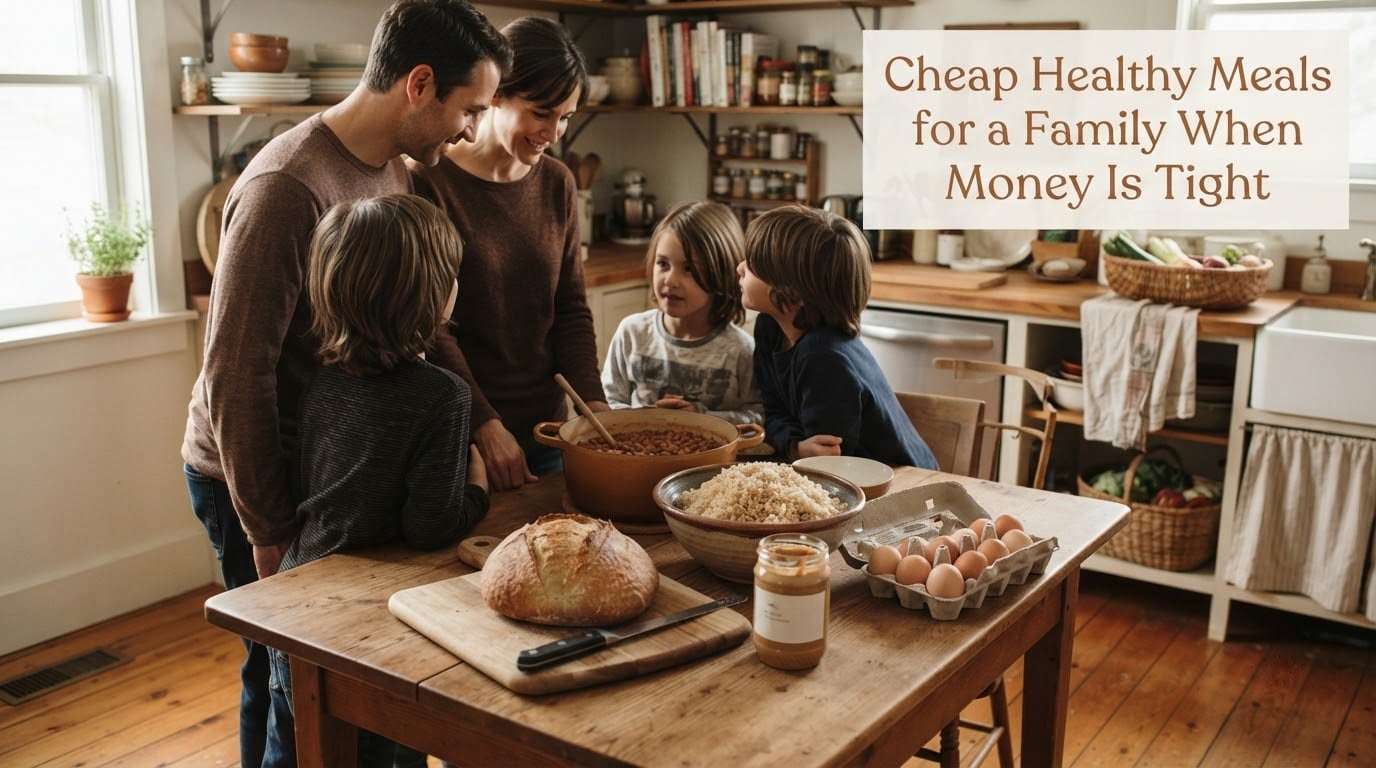
I have been there, opening the fridge at 5 p.m. with twelve dollars to my name and four hungry kids asking what’s for dinner. That kind of pressure can make you reach for a drive-through or a box of processed something, and the shame that follows is worse than the empty wallet. So let’s talk plainly about cheap healthy meals for a family when money is tight.
Healthy eating on a tight budget is not about perfection or coupon clipping for hours. It is a small system built around seven frugal pantry staples, a short shopping list, and a few batch-cooking habits. Our team has spent years feeding our own families of four to seven on under a hundred dollars a week, and we are sharing exactly what we do, with real cost data for 2026.
You will learn the seven staples that stretch the furthest, a 2-week rotating meal plan, where to shop, how to adapt meals for picky eaters or dietary restrictions, and how to waste less of what you buy. We will not promise you can eat like a food blogger on thirty dollars a week, but we will show you how to feed your family real, nutritious food for around ten dollars a day for four people.
Table of Contents
- How to Eat Healthy on an Extremely Tight Budget: The System That Works
- 7 Cheap Healthy Pantry Staples That Feed a Family for Pennies
- Rice: the ultimate budget stretcher
- Eggs: complete protein for around 25 cents each
- Oats: breakfast for a week for a few dollars
- Dry beans: pennies per serving of protein and fiber
- Lentils: fast-cooking, no soak, packed with iron
- Peanut butter: shelf-stable protein kids love
- Flour: the cheapest bread and bake base
- Feed a Family of 4 on $10 a Day: Real Cost Breakdown
- Budget Shopping Strategy: Where to Buy and What to Skip
- 2-Week Rotating Meal Plan for Variety Without Waste
- Batch Cooking and Leftovers: Stretch Every Dollar Further
- Adapting Budget Meals for Dietary Restrictions
- Food Waste Reduction: Use Every Scrap
- Community Resources When the Budget Runs Dry
- Frequently Asked Questions
- Final Thoughts on Feeding Your Family Well for Less
How to Eat Healthy on an Extremely Tight Budget: The System That Works
The fastest way to eat healthy when money is tight is to stop thinking in recipes and start thinking in systems. Recipes change weekly, but the system below is what actually keeps grocery bills down month after month.
1. Cook from scratch, not from a box
A box of mac and cheese costs about a dollar and feeds two. A homemade version made from a pound of pasta, milk, butter, and cheese costs a little more but feeds four to five and has real protein and calcium. Scratch cooking is almost always cheaper per serving once you count what people actually eat.
2. Build every meal around a frugal staple
Pick one cheap base (rice, eggs, oats, beans, lentils, peanut butter, or flour) and rotate around it. This is how my grandmother fed seven kids, and it works the same in 2026.
3. Plan before you shop, every single week
Plan dinners first, then build breakfasts and lunches from the same ingredients. A written plan reduces impulse buying and food waste at the same time.
4. Cook once, eat twice
Batch cooking on Sunday gives you a leftover lunch or a quick remix dinner later in the week. Beans cooked in one pot become soup, burritos, and dip.
5. Use store brands and shop sales
Store brands are usually made in the same factory as name brands. On staples like rice, oats, peanut butter, and canned beans, the savings are huge and the quality is identical.
7 Cheap Healthy Pantry Staples That Feed a Family for Pennies
These seven ingredients are the foundation of every cheap healthy meal plan we have ever built. They are shelf-stable, versatile, and pack serious nutrition for the cost. We have included real per-pound and per-serving costs so you can adjust for your region.
Rice: the ultimate budget stretcher
A 20-pound bag of long-grain white rice costs around fifteen dollars in 2026 at most discount stores. That is roughly 90 servings, or about seventeen cents a cup cooked. Brown rice costs a bit more but adds fiber and B vitamins.
Meal ideas: rice and beans with a fried egg on top, chicken and rice casserole, rice porridge for breakfast with banana and cinnamon, fried rice with whatever vegetables you have, and stuffed bell peppers.
Kid-friendly tip: serve rice plain first, then let kids add their own toppings from small bowls (cheese, salsa, peas, soy sauce). When they choose, they eat.
Eggs: complete protein for around 25 cents each
A dozen large eggs costs between two and four dollars depending on where you shop. Each egg has six grams of complete protein and twelve essential vitamins. They cook in minutes, which matters on busy weeknights.
Meal ideas: scrambled eggs with toast, veggie frittata, egg drop soup, breakfast burritos for dinner, hard-boiled eggs for grab-and-go snacks, and egg fried rice.
Kid-friendly tip: cut hard-boiled eggs into rounds with a sprinkle of salt. Picky eaters often eat what they can see.
Oats: breakfast for a week for a few dollars
A 42-ounce container of old-fashioned oats costs around four dollars. That is roughly 30 servings of hot oatmeal, or about thirteen cents a bowl. Steel-cut is more expensive but lasts longer and has a lower glycemic impact.
Meal ideas: overnight oats with peanut butter and banana, baked oatmeal squares, oat pancakes, savory oat porridge with egg and soy sauce, and homemade granola.
Kid-friendly tip: blend oats into pancakes or muffins. Kids never notice the whole grain swap.
Dry beans: pennies per serving of protein and fiber
A pound of dry pinto, black, or navy beans costs between one and two dollars and yields about six cups of cooked beans, or twelve half-cup servings. Canned beans cost more per serving but skip the soak time.
Meal ideas: bean and rice bowls, chili, refried beans for tacos and tostadas, white bean soup, hummus, and bean burritos. One pot of beans can become four different meals across the week.
Kid-friendly tip: mash beans into quesadillas or roll into burritos with cheese. The texture matters less when it is hidden inside something familiar.
Lentils: fast-cooking, no soak, packed with iron
A pound of dry lentils costs around two dollars and cooks in 20 to 25 minutes with no soaking. They are higher in protein than most other legumes and full of folate and iron, which matters on a budget diet.
Meal ideas: red lentil soup, lentil curry over rice, lentil tacos, lentil shepherd’s pie with mashed potato topping, and lentil pasta sauce. Red lentils break down into a creamy texture that picky eaters often accept.
Kid-friendly tip: blend cooked lentils into pasta sauce or meatballs. The flavor hides completely and the protein goes up.
Peanut butter: shelf-stable protein kids love
A 40-ounce jar of peanut butter costs around six dollars in 2026. That is roughly 50 two-tablespoon servings, or twelve cents each, with eight grams of protein and healthy fats.
Meal ideas: peanut butter and banana sandwiches, peanut noodles with frozen vegetables, peanut sauce on rice bowls, peanut butter oatmeal, and homemade peanut satay with cheap frozen veggies.
Allergy note: swap sunflower seed butter for school lunches or nut-free households. It works in every recipe here.
Flour: the cheapest bread and bake base
A 5-pound bag of all-purpose flour costs around two dollars. That makes about five loaves of basic bread, which is far cheaper per slice than store loaves. Whole wheat flour costs a bit more but adds fiber.
Meal ideas: simple sandwich bread, pancakes and waffles, biscuits, pizza dough, tortillas, and dumplings. A stand mixer helps but a strong arm and a bowl work too.
Tip: bake bread on Sunday for the week. Slice and freeze what you won’t eat in three days.
Feed a Family of 4 on $10 a Day: Real Cost Breakdown
This is the table the algorithm loves, and the one I wish someone had shown me ten years ago. Below is a realistic 7-day plan built around the seven staples, with rough per-serving costs based on average 2026 prices at discount grocery stores. Adjust for your region.
Sample 7-day plan for a family of four
- Day 1: Oatmeal with peanut butter and banana (breakfast), bean and rice bowls (lunch), egg fried rice with frozen veggies (dinner). Estimated day cost: nine dollars.
- Day 2: Scrambled eggs and toast (breakfast), peanut butter sandwiches and apple (lunch), lentil soup with bread (dinner). Estimated day cost: eight dollars.
- Day 3: Pancakes with peanut butter (breakfast), rice and bean burritos (lunch), pasta with homemade meat sauce (dinner). Estimated day cost: ten dollars.
- Day 4: Overnight oats (breakfast), egg salad sandwiches (lunch), chicken and rice with frozen broccoli (dinner). Estimated day cost: eleven dollars.
- Day 5: Eggs and oatmeal (breakfast), lentil tacos (lunch), bean and cheese quesadillas with rice (dinner). Estimated day cost: nine dollars.
- Day 6: Banana pancakes (breakfast), peanut noodles with frozen veggies (lunch), potato and egg hash (dinner). Estimated day cost: eight dollars.
- Day 7: French toast (breakfast), leftover buffet (lunch), homemade pizza with frozen veggies (dinner). Estimated day cost: nine dollars.
Weekly total: roughly sixty-four dollars for four people. That covers breakfast, lunch, and dinner plus snacks of fruit, popcorn, and milk. Add another ten to fifteen dollars if you include chicken a few times a week.
Where the savings come from: most meals lean on plant proteins (beans, lentils, eggs, peanut butter) which cost a fraction of meat per serving. Frozen vegetables are nearly always cheaper than fresh and lose no nutrition in the freezing process. The trick is rotating proteins so no single ingredient feels like the whole week.
Budget Shopping Strategy: Where to Buy and What to Skip
The cheapest grocery store is not the same for everyone, but the principles below apply whether you shop at Aldi, Walmart, a warehouse club, or a local co-op. Strategy matters more than store choice.
Choosing your store
Discount chains like Aldi, Lidl, and store-brand-focused Walmarts often beat conventional grocery stores by 30 to 50 percent on staples. Warehouse clubs (Costco, Sam’s Club, BJ’s) win on bulk sizes of rice, oats, flour, peanut butter, and frozen vegetables if your family is large enough to use them before they stale. Co-ops and Azure Standard-style bulk suppliers shine on grains, beans, and natural peanut butter.
One mom in our community told us she switched to Aldi and cut her grocery bill in half while doubling the amount of food in her pantry. That kind of swing is realistic when you stop buying name brands and convenience foods.
Bulk buying the right way
Bulk only works if you will actually use it. A 50-pound bag of potatoes for ten dollars is a great deal if your family eats them. It is a waste if half of them sprout before you get to them. Buy bulk sizes of items you already use weekly, never items you are trying to convince yourself to use.
Check unit price on the shelf tag. The unit price is the cost per ounce, pound, or serving, and it is the only honest comparison between a 2-pound bag and a 20-pound bag.
Store brand vs name brand: when it matters, when it doesn’t
On staples like rice, oats, flour, sugar, peanut butter, canned beans, frozen vegetables, and milk, store brands are usually identical to name brands at 20 to 40 percent less. The food is often made in the same factory.
Where name brands sometimes win: pasta sauce, shredded cheese (some store brands clump or taste waxy), yogurt, and any item where a small amount of extra fat or sugar actually matters for taste.
Test before you commit. Buy one store-brand item at a time and see if your family notices. Most of the time, they will not.
Seasonal produce buying calendar
Buying produce in season cuts your produce bill roughly in half compared to out-of-season prices. In most of North America in 2026, the cheapest picks by season look roughly like this:
- Winter: cabbage, carrots, potatoes, onions, citrus, apples, bananas.
- Spring: asparagus, spinach, peas, strawberries, lettuce.
- Summer: zucchini, tomatoes, cucumbers, corn, peppers, berries, stone fruit.
- Fall: squash, sweet potatoes, apples, pumpkin, Brussels sprouts, cauliflower.
When produce is cheap and abundant, buy extra and freeze it. Frozen summer berries in February cost triple what they did in July.
2-Week Rotating Meal Plan for Variety Without Waste
The trick to keeping a budget meal plan interesting is rotation, not novelty. Use the same 14 dinners twice a month, but never two nights in a row. After a few months, your family builds comfort with the routine and you stop feeling like you are reinventing dinner every night.
How the rotation works
Pick 14 dinner recipes that share overlapping ingredients. Most of the meals below use rice, beans, eggs, pasta, or potatoes as the base, with rotating proteins and vegetables. Shop once a week for perishables and once a month for staples.
Sample 14 dinners
- Bean and rice burritos with shredded cheese.
- Pasta with homemade meat or lentil sauce.
- Egg fried rice with frozen vegetables.
- Slow cooker chicken and rice.
- Lentil soup with crusty bread.
- Quesadillas with beans and cheese, side of rice.
- Homemade pizza on flour-dough crust.
- Chili with cornbread.
- Potato and egg hash with green onions.
- Tuna noodle casserole with peas.
- Peanut noodles with frozen stir-fry vegetables.
- Breakfast-for-dinner: scrambled eggs, toast, fruit.
- Roasted vegetable and chickpea sheet pan over rice.
- Tortilla soup with beans and leftover chicken.
Adapting to picky eaters
Serve components separately. A plate with rice, beans, cheese, and salsa lets a picky eater choose what to combine. The same recipe works for adventurous eaters who mix it all up.
Offer one safe food alongside the new food. A child who eats plain pasta will often try the new sauce if there is a breadstick on the side. Pressure backfires. Exposure works.
Batch Cooking and Leftovers: Stretch Every Dollar Further
Batch cooking is the single biggest time and money saver for budget cooking. One hour on Sunday can save you three weeknight cooking sessions and a dozen dollars in convenience foods.
Sunday batch cooking workflow
- Pick three to four recipes for the week.
- Start the longest-cooking item first (beans or a roast chicken).
- While that cooks, prep vegetables for the week.
- Cook a grain in bulk (a big pot of rice).
- Portion everything into containers for the fridge and freezer.
Three leftover transformations to learn
These three patterns turn one meal into three different meals and prevent dinner boredom.
- Roast chicken becomes chicken and rice (day 1), chicken noodle soup (day 3), chicken quesadillas (day 5).
- Cooked beans become bean and rice bowls (day 1), chili (day 3), refried beans for tostadas (day 5).
- Pasta sauce becomes spaghetti (day 1), baked ziti (day 3), pizza sauce (day 5).
Freezer-friendly meals
Soups, chilis, stews, cooked beans, cooked rice, bread, pancakes, and most casseroles freeze beautifully for two to three months. Label everything with the date. First-in, first-out keeps the freezer from becoming a graveyard.
Adapting Budget Meals for Dietary Restrictions
Budget cooking gets harder when someone in the house cannot eat the cheapest options. The good news is most restrictions have a swap that keeps the cost low.
Vegetarian swaps
Beans, lentils, eggs, peanut butter, and tofu replace meat at a fraction of the cost. A pound of dry beans costs about the same as a single can of tuna and yields far more protein.
Gluten-free swaps
Rice, oats (certified gluten-free), potatoes, corn tortillas, and eggs are naturally gluten-free and form the base of many budget meals. Skip the pasta and use rice noodles or spiralized zucchini instead.
Legume-free swaps
Many budget guides lean heavily on beans and lentils, which is a real problem for households avoiding legumes. Eggs, oats, peanut butter, canned tuna, chicken thighs, and frozen vegetables can carry a whole week without a single bean.
A legume-free week might look like: oatmeal or eggs for breakfast, peanut butter sandwiches for lunch, and rice-based dinners with chicken or eggs. The cost is similar and the variety holds.
Picky eater adaptations
Keep one safe food at every meal. Serve components separately rather than mixed. Let kids help wash vegetables or stir pots. Familiarity is built through exposure, not pressure. Most picky eaters add new foods to their accepted list over months, not days.
Food Waste Reduction: Use Every Scrap
The average family throws out about a third of the food they buy. On a tight budget, that is real money. A few habits close the gap fast.
Proper storage to extend life
Store potatoes, onions, and garlic in a cool dark place away from each other. Keep berries unwashed until you eat them. Wrap greens in a damp paper towel inside a plastic bag. Refrigerate bread only after it has cooled completely, then slice and freeze what you will not eat in three days.
Repurposing scraps
Vegetable trimmings, chicken bones, and herb stems make excellent broth. Keep a gallon bag in the freezer and add scraps until it is full, then simmer with water for an hour. Strain and use the broth in soups, rice, or sauces.
Stale bread becomes bread crumbs, croutons, French toast, or bread pudding. Overripe bananas go into pancakes or muffins. Wilting vegetables become soup or stir-fry.
First-in, first-out pantry rotation
Put newer items behind older ones so you use up what you have first. Tape a small label with the purchase month on bulk bins. Check your fridge every few days for anything that needs to be eaten soon and plan a meal around it.
Community Resources When the Budget Runs Dry
When the budget really runs dry, you do not have to figure it out alone. Several programs and resources are designed exactly for this moment.
Local food banks and pantries
Food banks distribute free groceries to households that need them, with no judgment and no income test in most cases. Search “food bank near me” or call 211 (in the US and Canada) for the closest option. Many also have mobile pantries that visit neighborhoods on a schedule.
Discount grocery apps and co-ops
Apps like Flashfood, Too Good To Go, and Olio list surplus food from grocery stores and restaurants at deep discounts. Co-ops and buying clubs pool purchases for wholesale prices.
SNAP, WIC, and benefits programs
If you have not applied for SNAP (formerly food stamps) or WIC (for pregnant women and young children), check your eligibility. The application is usually short and benefits can be loaded onto a card within weeks. School meal programs also offer free or reduced-price breakfast and lunch to qualifying students.
Community gardens and gleaning groups also exist in most cities and trade volunteer time for fresh produce. Growing even a few herbs on a windowsill cuts the spice bill and adds flavor to budget meals.
Frequently Asked Questions
How to eat healthy on an extremely tight budget?
Build every meal around seven frugal staples: rice, eggs, oats, dry beans, lentils, peanut butter, and flour. Buy store brands, shop discount chains like Aldi, plan meals before shopping, and batch cook on weekends. A family of four can eat three meals a day for around sixty to seventy dollars a week using this approach.
How to feed a family of 4 on $10 a day?
Lean heavily on plant proteins (beans, lentils, eggs, peanut butter) which cost a fraction of meat per serving. A realistic plan includes oatmeal or eggs for breakfast, sandwiches or leftovers for lunch, and rice-based dinners with beans, eggs, or chicken a few times a week. Frozen vegetables are usually cheaper than fresh and equally nutritious.
What are some good meal ideas for a tight budget?
Oatmeal with peanut butter, rice and beans, egg fried rice, lentil soup, peanut noodles, potato and egg hash, quesadillas, pasta with homemade sauce, breakfast-for-dinner, and chili with cornbread. Each meal costs under two dollars per serving and uses staples that last a long time in the pantry.
How to meal plan when money is really tight?
Plan dinners first using overlapping ingredients, then build breakfasts and lunches from the same list. Write the plan down before you shop, and shop once a week. A 2-week rotating plan reduces decision fatigue and ensures you actually use what you buy.
What to cook when you have nothing in the pantry?
Eggs, rice, oats, peanut butter, and frozen vegetables can sustain a household for days. Scrambled eggs, rice with frozen peas and soy sauce, oatmeal with peanut butter, and peanut noodles with frozen stir-fry vegetables all use only shelf-stable staples and take under thirty minutes.
How to buy groceries when you only have $30?
Buy a dozen eggs, a 2-pound bag of rice, a pound of dry beans, a jar of peanut butter, a bag of oats, a head of cabbage, a bag of onions, a few carrots, and a bag of frozen mixed vegetables. This haul feeds one person for about a week and a family for three to four days.
Final Thoughts on Feeding Your Family Well for Less
Cheap healthy meals for a family when money is tight are built on a small system, not heroic effort. Pick the seven staples, write a 2-week rotating plan, shop with a list, and cook once on Sunday. That is the whole game.
Start with one change this week. Maybe it is switching to store-brand peanut butter. Maybe it is cooking a pot of dry beans on Sunday. Small swaps add up, and within a few months you will look back at your old grocery bill and be amazed at how far the same money now stretches. You’ve got this.