
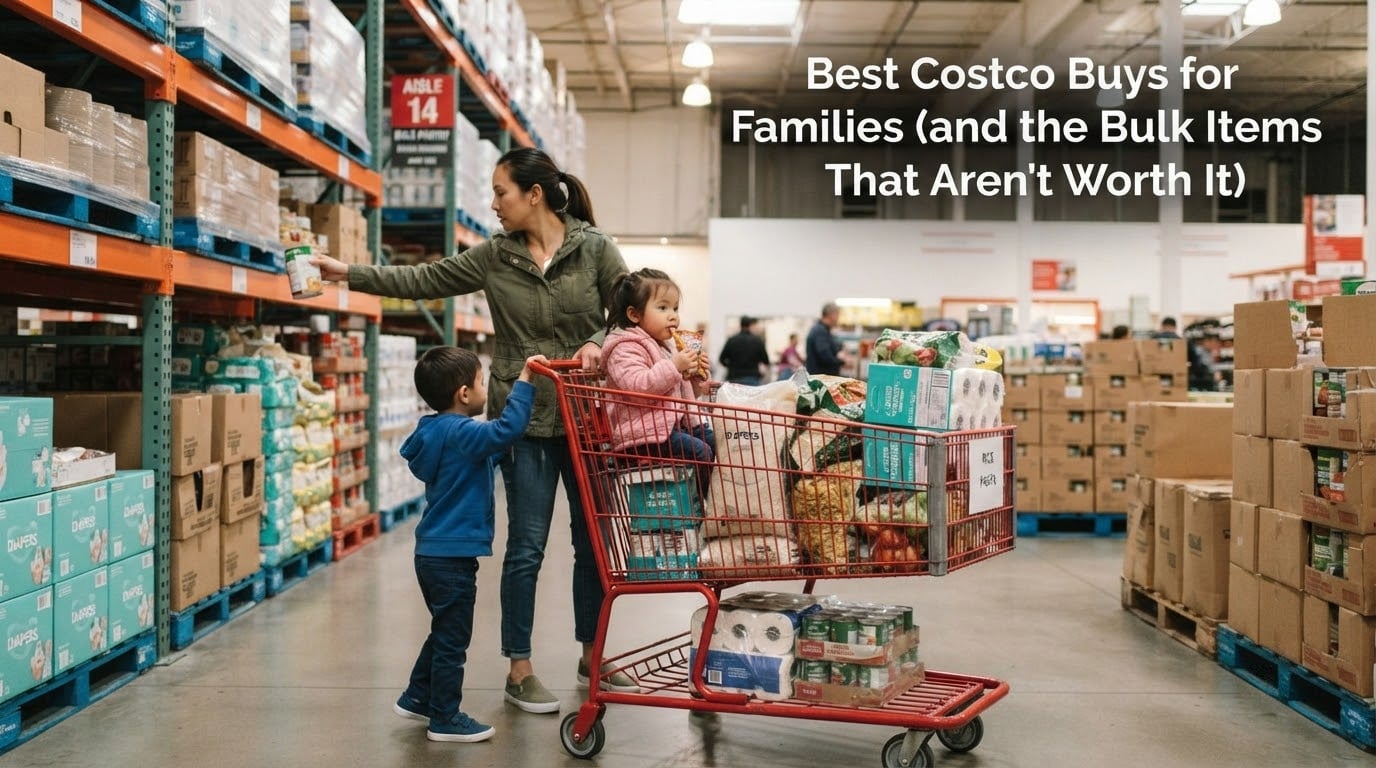
Walking into Costco with a stroller, a toddler on your hip, and a grocery list feels like running a small grocery marathon. I have been doing exactly that for years, and I have thrown out enough sad bags of slimy lettuce to know which Costco hauls actually feed a family and which ones quietly drain the budget.
Costco still pulls a 92.3% renewal rate across the U.S. and Canada, so the warehouse club model clearly works for most households. The trick is learning which aisles earn their keep and which bulk items just take up pantry space until they expire. This guide breaks down the best Costco buys for families, the bulk items that are not worth it, and the shopping rules I wish someone had handed me on day one.
Table of Contents
What Costco Actually Does Well for Families
Costco is a membership-based warehouse club that sells large-quantity packages at lower per-unit costs than most regular grocery stores. For families, the appeal is simple: the unit price on staples like diapers, paper towels, and pantry items is usually a real discount, not a marketing trick.
The Kirkland Signature store brand is the engine behind most of those savings. Kirkland products are made by the same manufacturers who produce name-brand competitors, so reviewers consistently report that the quality is comparable to what is sitting on the shelf next to them at twice the cost.
The two main membership tiers are Gold Star and Executive. Gold Star covers the basics, while Executive adds a 2% reward on most Costco purchases (up to a cap) and extra perks on services. For a family of four doing regular weekly shops, the Executive upgrade often pays for itself within the first year.
Best Costco Buys for Families
This list focuses on items that store well, get used quickly, and consistently beat regular grocery store prices. I have grouped them by category so you can shop by aisle instead of scrolling through a long random list.
Pantry Staples and Shelf-Stable Foods
Kirkland Signature Thai Hom Mali Jasmine Rice. A 25-pound bag lasts our family of four roughly two months. The rice stores indefinitely in a sealed container, and the per-pound price is noticeably lower than the smaller bags at the supermarket.
Kirkland Signature Whole Grain Rolled Oats. A 10-pound container runs around $8 and lasts for months of weekday breakfasts. Oats are a great example of an item where the bulk size matches the shelf life.
Dry Lentils. Lentils have an excellent shelf life, are inexpensive per pound at Costco, and cook fast for weeknight dinners. They are also a smart item for emergency preparedness.
Canned Tuna and Canned Salmon. Both have best-by dates measured in years. Reviewers regularly note that canned salmon is a particularly strong buy because the quality holds up for at least four years.
Better Than Bouillon Organic Roasted Chicken Base. Frequent broth users call this one of the best deals in the store. A small jar replaces multiple boxes of broth and lasts a long time in the fridge.
Baby, Toddler and Kid Supplies
Kirkland Signature Diapers and Wipes. Parents on Reddit regularly rank Kirkland diapers and wipes above the name brands, and the per-diaper savings add up fast when you are changing a baby ten times a day.
TortillaLand Flour Tortillas. Around $5 for roughly 100 tortillas, and they freeze beautifully in stacks of ten. Pull a stack, thaw, and dinner is halfway done.
Proteins and Freezer-Friendly Buys
Kirkland Signature Chicken Breast (canned). A pantry workhorse for quick salads, casseroles, and emergency meals. Reviewers also point out that canned chicken is one of the most donated items at food pantries.
Shelf-Stable Milk. Ideal for households that do not drink milk fast enough to finish a regular gallon before it spoils. Seniors and small households especially like this option for coffee and baking.
Snacks and Lunchbox Fillers
Kirkland nut butters, trail mix, and dried fruit. The per-ounce cost is a clear win for school lunches and after-school snacks. They store well in the pantry and rarely go to waste.
Cafe Bustelo Single-Serve Coffee. If your household runs on espresso, the bulk single-serve packs beat most grocery store prices and last for months.
The Bulk Items That Aren’t Worth It
This is the list I wish I had read before my first Costco run. Buying in bulk only saves money if your family actually finishes the package before it goes bad. Here are the categories where reviewers report the most waste.
Fresh Produce in Large Quantities
Berries, lettuce, and pre-cut vegetables look like a deal until you are composting half the bag a week later. Smaller households especially struggle here. If you are a family of one or two, buy produce at your regular grocery store and skip the Costco produce aisle.
Oversized Spice Containers
Spices lose potency long before you finish a Costco-sized jar. Reviewers regularly note that a giant container of paprika or oregano ends up in the back of the cupboard for years, flavorless. Buy spices in small bottles from the grocery store instead.
Bakery Items You Cannot Freeze
Costco muffins, croissants, and sliced bread go stale fast. Unless you have a plan to freeze portions the same day, the bakery aisle is one of the easiest places to throw money away.
Large Boxes of Cereal
Cereal gets stale before most families finish the mega box. The cardboard packaging is not airtight, and the savings evaporate once you start picking out the soft ones at the bottom of the bag.
Cases of Soda and Sugary Drinks
Beyond the freshness issue, oversized cases of soda encourage overconsumption, especially with kids in the house. Smaller packs from the regular grocery store usually end up cheaper per actually-drunk ounce.
Items You Only Use in Tiny Amounts
Specialty sauces, fancy oils, and seasonal baking ingredients are not bulk buys no matter what the price tag says. If you only use a tablespoon a month, the giant jar will expire before you finish it.
Family Size Matters: How to Adjust Your Costco List
The biggest mistake I see new Costco shoppers make is copying a list written for a family of six. Your Costco list should match your actual household size, your storage space, and how fast you cook.
Singles and couples: Focus on shelf-stable pantry items, canned proteins, and household consumables like toilet paper and laundry detergent. Skip the produce aisle and the bakery almost entirely.
Families of 3 to 4: This is the sweet spot for Costco. You can finish most bulk proteins, you go through snacks fast enough for the bulk sizes to make sense, and you have enough demand for the household consumables to justify the trip.
Families of 5 or more: Almost everything on the best-buys list works for you, with one warning: storage space matters more than ever. If you do not have a deep freezer and a real pantry, the savings disappear into spoilage.
Quick Tips for Costco Shopping with Kids
The shopping experience is half the battle. A few small habits make the trip faster, cheaper, and less stressful with little ones in tow.
- Go midweek, mid-morning. Weekday mornings are the quietest at most warehouses. Lines are shorter, samples are still out, and the parking lot is bearable.
- Bring a list and stick to it. Costco is designed to encourage impulse buying. A written list is the only thing that has consistently saved me from bringing home a giant stuffed bear we did not need.
- Use the $20 rule. Before anything goes in the cart, ask yourself: will we actually use at least $20 worth of this before it goes bad? If not, leave it on the shelf.
- Pack a snack and a charger. A hungry toddler turns a 30-minute trip into a 90-minute meltdown. A phone charger keeps the iPad running for the longer hauls.
- Walk the perimeter first. Hit the produce, meat, dairy, and bakery before the center aisles. If your cart is already full of fresh food, you are less likely to impulse-buy a kayak.
How to Calculate if Bulk Buying Actually Saves Money
Bulk savings only exist if the math works out after spoilage, storage, and impulse purchases. Run these three checks before you commit to a Costco haul.
- Compare the unit price, not the package price. The shelf tag shows cost per ounce, pound, or sheet. Compare that number directly to the same item at your regular grocery store.
- Estimate your real consumption rate. Be honest. Will your family actually eat 10 pounds of oats in three months, or will half go stale?
- Factor in waste. If you throw out 20% of a bulk item, your real cost is the package price divided by the 80% you actually use. That is rarely the bargain it looked like at the register.
Frequently Asked Questions
What’s worth buying in bulk at Costco?
Pantry staples with long shelf lives like Kirkland jasmine rice, rolled oats, dry lentils, canned tuna, canned salmon, Better Than Bouillon, and Kirkland diapers and wipes are consistently worth buying in bulk. They store well, get used quickly, and beat regular grocery store unit prices.
What not to buy in bulk at Costco?
Skip the fresh berries and pre-cut vegetables unless you will eat them in a few days, oversized spice jars that lose potency, bakery items you cannot freeze, mega boxes of cereal that go stale, and large cases of soda that encourage overconsumption.
What are the best and worst things to buy at Costco?
The best buys are shelf-stable pantry items, Kirkland diapers and wipes, canned proteins, and household consumables like paper goods. The worst buys are fresh produce in large quantities, oversized spice jars, bakery items, oversized cereal, and any specialty ingredient you only use in small amounts.
What are some of Costco’s best-kept secrets?
The biggest secrets are the $20 rule (only buy what you will actually use $20 of), shopping midweek for shorter lines, walking the perimeter before the center aisles, and checking unit prices on the shelf tags instead of comparing package prices.
What is the $20 rule at Costco?
The $20 rule means you only put an item in your cart if your family will actually use $20 worth of it before it expires or goes bad. If not, it is not a bargain regardless of the sticker price.
Why are people canceling their Costco membership?
Reviewers report canceling because of crowded warehouses, busy parking lots, longer checkout lines, membership fee increases, tire center service complaints, and a feeling that the bulk math no longer works for their smaller household. Acknowledging that Costco is not the right fit for every family is part of making the membership work for you.
Conclusion
The best Costco buys for families are the items your household will actually use up before they spoil. Pantry staples, diapers and wipes, canned proteins, and household consumables are the backbone of a smart Costco haul. The bulk items that are not worth it are the ones that lose freshness, potency, or your family’s interest before you finish them.
Match your list to your family size, use the $20 rule at the cart, and shop midweek if you have little kids. Costco is a tool, not a personality trait. Use it where it saves you real money and skip the rest. That is how the membership fee actually pays for itself in 2026.