
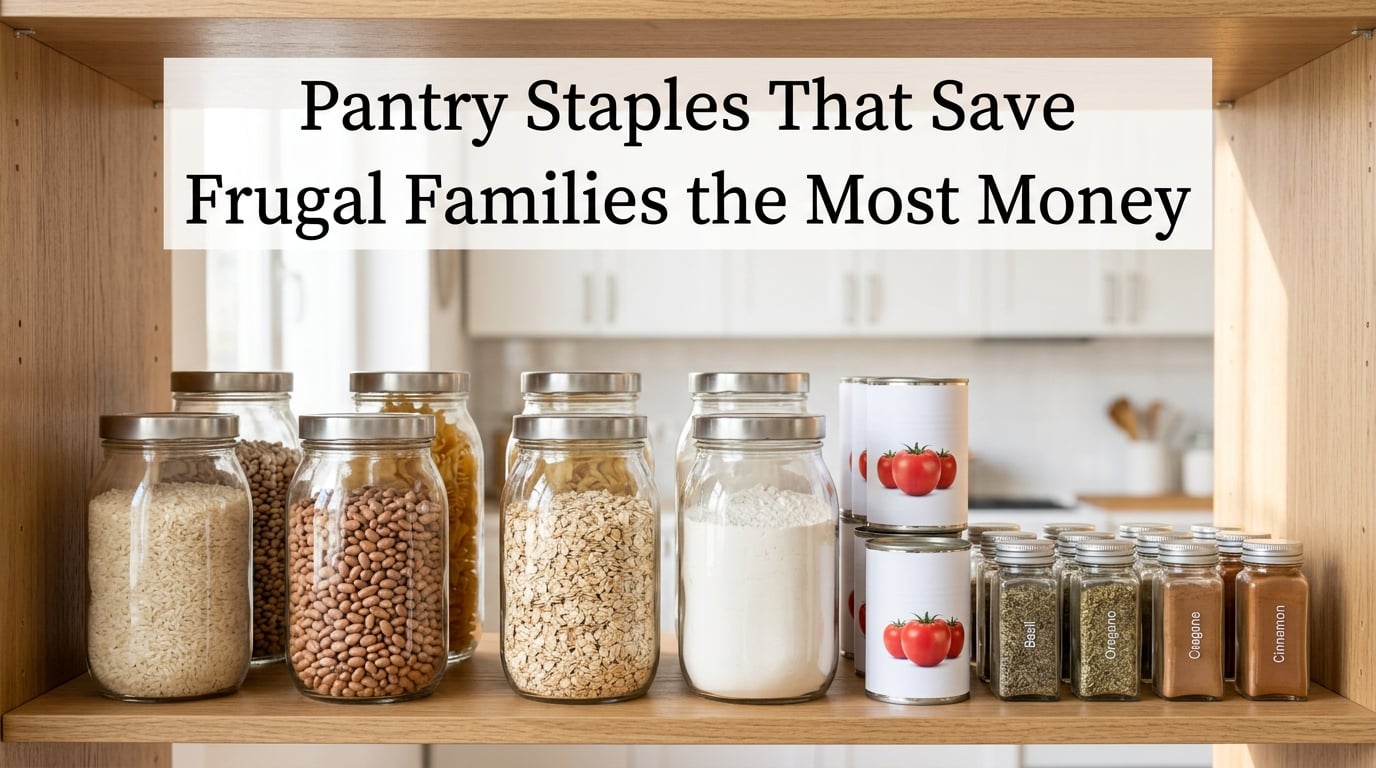
When our grocery bill started climbing faster than our income, I pulled every recipe card out of the drawer and asked one simple question: which pantry staples that save money could replace the expensive convenience foods we had been grabbing on autopilot? The answer changed how I shop forever.
In this guide, I’m sharing the exact pantry staples that save money for our family of four here in Edmonton, plus the strategies we use to keep the cupboard full without bleeding our budget. If you have ever wondered how other frugal families manage to feed everyone on what feels like nothing, this list is your starting point.
Table of Contents
- Why a Stocked Pantry Is the Best Money-Saving Tool for Frugal Families
- The Core Dry Goods: Rice, Beans, Pasta, Oats, and Flour
- Canned and Jarred Goods That Stretch a Grocery Budget
- Baking Supplies That Double as Pantry Staples
- Spices and Seasonings Worth Stocking on a Budget
- Breakfast Staples That Save Money All Month
- Snacks and Lunchbox Staples From Your Pantry
- Smart Shopping Strategies for Edmonton and Alberta Families
- Storage Tips to Prevent Waste and Make Staples Last
- Sample 1-Week Meal Plan Using Only Pantry Staples
- Frequently Asked Questions About Frugal Pantry Staples
- Final Thoughts on Building a Frugal Pantry That Actually Saves Money
Why a Stocked Pantry Is the Best Money-Saving Tool for Frugal Families
A stocked pantry turns every meal from a problem into a project, and that is the whole point. When you already have rice, beans, pasta, oats, canned tomatoes, and a few spices on the shelf, you can throw dinner together in fifteen minutes without a single emergency trip to the store.
Edmonton families feel price spikes hard, especially on produce in February and on packaged goods when supply chains hiccup. The pantry staples that save money in our house are the ones that hold their value for months, never need a fridge, and turn into five different meals before we run out.
You will notice that I never recommend chasing sales on junk food or stocking up on snacks just because they are cheap. The real win comes from versatile base ingredients that build meals, treats, and breakfasts from scratch.
The Core Dry Goods: Rice, Beans, Pasta, Oats, and Flour
Every frugal pantry starts with five dry-good workhorses: rice, dry beans, pasta, rolled oats, and all-purpose flour. These five items show up in nearly every budget meal plan because they are cheap per serving, last for years on the shelf, and combine with almost anything else you have on hand.
Rice. A ten-kilogram bag of white rice from a bulk bin is one of the lowest-cost calories in any Edmonton grocery store. I keep both white and brown rice, but white rice wins for cost per serving and storage life. Rice cooks fast, freezes well as a cooked base, and absorbs whatever flavour you add to it.
Dry beans. Dry beans are roughly one-third the cost of canned beans per serving once you cook them. A slow cooker full of pinto, black, or navy beans on Sunday gives us a week’s worth of tacos, soups, and chili fillings. If you forget to soak, an Instant Pot cooks dry beans in under thirty minutes with no soaking.
Pasta. Pasta is the ultimate kid-friendly cheap meal, and it stores for years in a sealed container. I keep three shapes on hand: spaghetti for quick dinners, penne for baked pasta, and elbow macaroni for casseroles. Egg noodles are a nice add-on if your family loves stroganoff or chicken and noodles.
Rolled oats. Oats are my breakfast saver. One bag of rolled oats makes a week of porridge, a batch of homemade granola, and a few batches of oatmeal cookies. Quick oats work too, but old-fashioned rolled oats give better texture in baked goods.
All-purpose flour. Flour is the unsung hero of a frugal pantry. Beyond bread, you can use it to thicken sauces, bread chicken, make pancakes from scratch, roll out pizza dough, and bake simple biscuits. A large bag of flour costs less per cup than a single box of pancake mix.
Canned and Jarred Goods That Stretch a Grocery Budget
Canned and jarred goods are the bridge between your dry staples and a real meal. They add protein, acid, and flavour without needing refrigeration until you open them, and they survive power outages and snowstorms.
Canned tomatoes. Whole, crushed, diced, sauce, and paste: each can pulls different weight in the kitchen. Crushed tomatoes are the backbone of chili and pasta sauce. Tomato paste concentrates flavour in soups. A few cans of diced tomatoes make a thirty-minute soup that tastes like it simmered all day.
Canned beans. When dry beans are not realistic, canned beans save the day. Black beans for tacos, chickpeas for curry, kidney beans for chili. They are more expensive than dry, but they are ready when you are. I always keep at least six cans on hand for last-minute dinners.
Canned tuna and salmon. Tuna is one of the cheapest proteins per serving at any Edmonton grocery store. Salmon is pricier, but a couple of cans stretch pasta or rice into a full meal. Mix tuna with a little mayo, chopped pickles, and rice for a fast lunch.
Canned soup and broth. A few cans of condensed soup make quick casseroles. Boxes or cartons of broth add depth to anything you cook. I keep both chicken and vegetable broth on hand and rotate them through rice dishes, soups, and pan sauces.
Pickled and jarred vegetables. Pickles, olives, and jarred peppers add bright flavour to otherwise plain pantry meals. They are not cheap per jar, but a small amount transforms a bowl of rice and beans into something special, so a jar lasts for many meals.
Baking Supplies That Double as Pantry Staples
Baking supplies pull double duty in a frugal pantry: they feed your baking habit, but they also rescue dinner when nothing else is planned.
Sugar and honey. White sugar, brown sugar, and a squeeze bottle of honey cover most baking needs. Honey also works in homemade granola and on toast, which makes it more useful than fancy syrups.
Baking powder, baking soda, and yeast. Baking powder and soda are non-negotiable for pancakes, biscuits, and quick breads. Active dry yeast lets you bake bread and pizza dough from scratch for the cost of flour alone, and a single packet of yeast costs less than a single bakery bun.
Cooking oils. A jug of neutral cooking oil handles frying and baking. A small bottle of olive oil adds flavour to salad dressings and bread dips. Buying in larger containers is much cheaper per ounce than the small bottles near the front of the store.
Vinegars. White vinegar is a cleaner, a pickler, and a baking helper. Apple cider vinegar adds tang to dressings and marinades. A good balsamic is a treat, but a basic red wine vinegar covers most cooking needs.
Spices and Seasonings Worth Stocking on a Budget
Spices are the secret to making cheap food taste good. A small lineup of basic seasonings turns plain rice and beans into Mexican, Indian, Italian, or Thai dishes, all from the same pantry base.
The starter lineup I recommend to every frugal family is salt, black pepper, garlic powder, onion powder, Italian seasoning, cumin, paprika, and chili powder. With these eight spices, you can make spaghetti sauce, chili, taco filling, curry, and soup, all from a single bag of rice or a single can of beans.
Buy spices from ethnic markets in Edmonton’s north end or from the bulk section at Bulk Barn. Per ounce, ethnic market spices are often a fraction of supermarket prices. Whole spices last longer than pre-ground, but a small mortar and pestle is enough for everyday use.
Spices lose potency after about two years, so label every jar with the date you opened it and replace the oldest ones first. A spice rack that gets regular use is a spice rack that keeps your food interesting.
Breakfast Staples That Save Money All Month
Breakfast is the meal where families leak the most money, because cereal boxes, granola bars, and breakfast sandwiches are expensive per serving. The pantry staples that save money at breakfast are the same dry goods you already stock, just used differently.
Rolled oats make porridge, overnight oats, granola, and oatmeal pancakes. A batch of homemade granola costs a fraction of the bagged kind and lasts two weeks in a sealed jar.
Eggs are the perfect anchor protein for breakfast, and they pair with pantry staples like bread, tortillas, and pancake mix for a fast morning meal. If your family goes through eggs, buy a flat when you see the price dip.
Pancake mix from scratch is flour, baking powder, salt, sugar, and a little oil. Make a big jar of dry mix and you can pull out a stack of pancakes whenever the kids beg for them. Waffle batter is the same mix plus a splash more milk.
Snacks and Lunchbox Staples From Your Pantry
Snacks are another category where families quietly spend a fortune. The trick is keeping a small lineup of pantry-friendly snacks that kids actually like and that travel in lunchboxes without refrigeration.
Popcorn kernels pop up huge bowls of snack food for pennies per serving. A few tablespoons of kernels with oil and salt is cheaper than a single bag of microwave popcorn.
Peanut butter is a protein-rich spread that works on toast, in sandwiches, on apple slices, and stirred into oatmeal. A no-name store brand is fine for cooking and most lunches.
Crackers, rice cakes, and dry cereal all work as lunchbox bases. Pair them with shelf-stable fruit cups or raisins and you have a complete school lunch that costs less than the school cafeteria meal.
Homemade trail mix is just peanuts, raisins, a few chocolate chips, and whatever cereal you have on hand. Measure it into small bags and you control the portions and the cost.
Smart Shopping Strategies for Edmonton and Alberta Families
Staples only save money if you buy them at the right price. Here in Edmonton, our family rotates between three or four stores depending on what is on sale, and that habit alone cuts our grocery bill by hundreds each month.
Superstore (Loblaws). Superstore runs the President’s Choice and No Name brands, and their PC Optimum points add up fast. The bulk section is small but consistent, and weekly sales cover almost every pantry staple at least once per quarter.
Save-On-Foods. Save-On-Foods often prices staples like flour, sugar, and rice lower than Superstore, especially on Western Family items. Their weekly flyer is worth checking before any big pantry run.
No Frills and Real Canadian Superstore discount banners. No Frills is the bare-bones Loblaws banner, and it is the cheapest of the three for most dry goods. The trade-off is fewer brands and longer lines.
Bulk Barn and bulk bins. Bulk Barn is a Canadian staple and worth a stop for spices, baking chocolate, oats, and candy-baking ingredients. Bring your own containers when you can to save a little extra.
Ethnic markets. Edmonton’s Italian, Indian, Filipino, and Chinese markets sell rice, lentils, spices, and noodles at prices that beat every mainstream chain. The variety is also much wider than what you find in a typical supermarket.
Sales cycles and price books. Most pantry staples cycle on a six-to-twelve-week sale pattern. Keep a small notebook in the kitchen and write down the best price you see for each staple. After two months, you will know exactly when to stock up.
Storage Tips to Prevent Waste and Make Staples Last
The cheapest pantry staple in the world becomes expensive the moment you throw it out. Storage matters as much as shopping, and a few small habits keep our pantry in rotation without bugs, mould, or mystery Tupperware.
Decant bulk staples into airtight containers as soon as you get home. Glass jars and food-grade buckets are better than the bags they come in, which can let in moisture and pantry moths.
Use a first-in-first-out system: new purchases go to the back of the shelf, older items come to the front. Mark every container with the month and year you bought it so you always know what is oldest.
Keep a freezer backup for items you buy in bulk when prices dip, especially flour, nuts, and bread. Freezing flour for a few days also kills any weevil eggs that might be hiding in a freshly opened bag.
Pantry pests love warm, dark spaces. Wipe shelves with a little vinegar water every time you restock, and never store dry goods on the floor where mice can reach them.
Sample 1-Week Meal Plan Using Only Pantry Staples
To prove how far a frugal pantry stretches, here is the exact week of dinners our family eats when I refuse to step foot in a grocery store. Every meal uses only dry and canned goods from the list above, plus a few freezer basics.
Monday: Bean and rice burrito bowls. Brown a chopped onion, add canned black beans, cooked rice, cumin, and chili powder. Serve in tortillas with salsa if you have any.
Tuesday: Pantry pasta. Boil penne, warm canned crushed tomatoes with garlic powder, Italian seasoning, and a pinch of sugar. Stir together and top with a little grated cheese.
Wednesday: Tuna noodle casserole. Cook egg noodles, mix with canned tuna, a can of condensed soup, and frozen peas. Bake until bubbly.
Thursday: Lentil soup. Simmer dry lentils (or canned), canned tomatoes, broth, carrots if you have them, cumin, and paprika. Salt and serve with bread.
Friday: Chickpea curry over rice. Saute onion with curry powder or cumin, add canned chickpeas, canned tomatoes, and a splash of coconut milk if you have it. Serve over rice.
Saturday: Homemade pizza. Stretch a simple flour-yeast-water dough, top with canned tomato sauce, grated cheese, and whatever canned vegetables or olives you have around.
Sunday: Pantry chili. Combine canned kidney beans, canned diced tomatoes, canned corn, onion, chili powder, and cumin in a slow cooker all day. Serve over rice or with crackers.
Snacks and breakfasts throughout the week are oatmeal, popcorn, peanut butter toast, homemade trail mix, and pancakes from your dry mix. The fridge stays mostly empty and the grocery budget stays mostly intact.
Frequently Asked Questions About Frugal Pantry Staples
What are some budget-friendly staples for a pantry?
Budget-friendly pantry staples include dry rice, dry beans, pasta, rolled oats, flour, canned tomatoes, canned beans, canned tuna, broth, peanut butter, and basic spices like salt, pepper, garlic powder, and cumin. These ingredients combine into dozens of meals, store for months on the shelf, and cost the least per serving.
What two foods never expire?
Honey and white rice are the two pantry staples that are widely cited as never expiring when stored properly. Salt, sugar, dried beans, and hard wheat also keep indefinitely in airtight containers. Most other staples degrade in quality over a few years but stay safe.
What is the 3-3-3 rule for groceries?
The 3-3-3 rule means you use three proteins, three vegetables or fruits, and three pantry or grain staples to plan meals. It keeps variety high while limiting waste, and it works especially well for frugal families shopping on a tight rotation.
What is the cheapest grocery list I can make for a month?
A one-month cheapest grocery list for a family usually centers on rice, dry beans, oats, flour, pasta, canned tomatoes, canned beans, peanut butter, eggs, frozen vegetables, potatoes, onions, and a small lineup of spices. Build the list around these pantry staples that save money and stock up during sales to keep the total low.
Final Thoughts on Building a Frugal Pantry That Actually Saves Money
The pantry staples that save money are not fancy or exciting. They are the same dry goods, canned items, and basic spices that frugal families have stocked for generations: rice, beans, pasta, oats, flour, canned tomatoes, and a small lineup of seasonings.
Start with one or two items per shopping trip, store them properly, and rotate through them before they go stale. Within a few months, your pantry will quietly become the most powerful budgeting tool in your kitchen, and your grocery bill will tell the story.
If you have a favourite frugal pantry staple we missed, drop it in the comments. Our readers love swapping ideas, and the best tips usually come from families who are actually living the life.